Healthy Heart & Healthy You


Comments

Popular posts from this blog

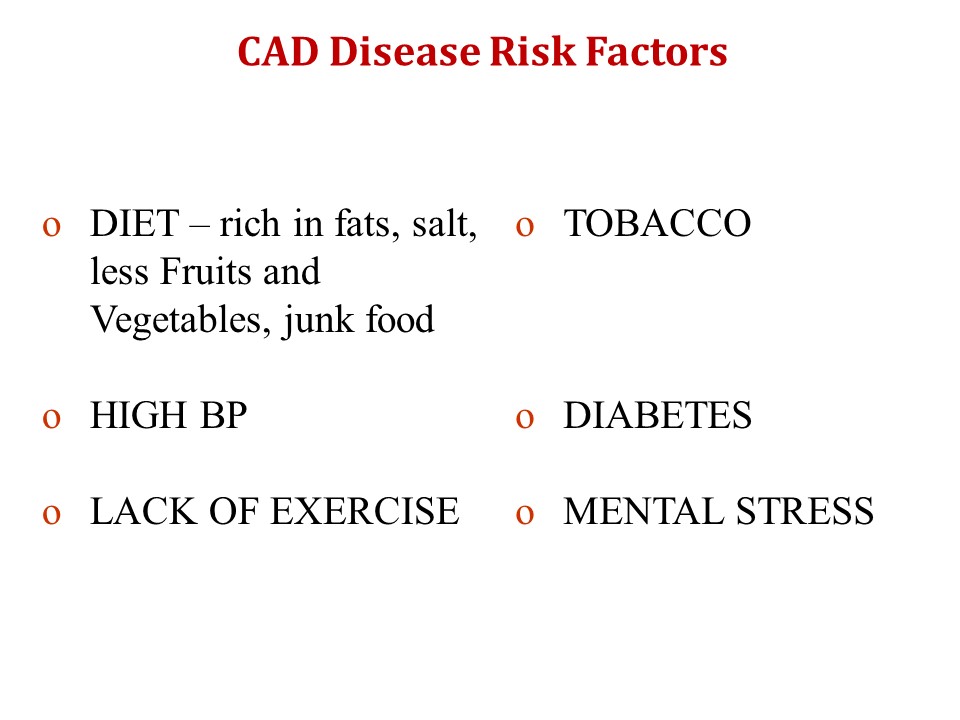
CORONARY ARTERY DISEASE (CAD)

If you or a member of your family has been diagnosed with coronary artery disease (CAD), you may have questions about the disease and its treatment, especially if your doctor has recommended angioplasty followed by Implantation of a drug eluting coronary stent. In this blog I will answers some of the questions patients with coronary artery Disease often ask. Angioplasty: A balloon procedure to open an obstruction or narrowing of a blood vessel. Also known as precutaneous transluminal coronary angioplasty (PTCA). Stent: An expandable, slotted metal tube, inserted into a vessel. A stent acts as a scaffold to provide structural support for a vessel. A drug-eluting stent allows  for the active release of that particular drug at the stent implantation site. Atherosclerosis:  A disease process in which fatty substances (plaque), such as cholesterol, are deposited on the inner lining of blood vessels. Angina (Pectoris): Chest discomfort, pain, ...

Pacemaker

What Is a Pacemaker A pacemaker is a small device that's placed in the chest to help control abnormal heart rhythms. This device uses electrical pulses to prompt the heart to beat at a normal rate. Pacemakers are used to treat Arrhythmias are problems with the rate or rhythm of the heartbeat. During an arrhythmia, the heart can beat too fast, too slow, or with an irregular rhythm. A heartbeat that's too fast is called tachycardia .A heartbeat that's too slow is called bradycardia. During an arrhythmia, the heart may not be able to pump enough blood to the body. This can cause symptoms such as fatigue (tiredness), shortness of breath, or fainting. Severe arrhythmias can damage the body's vital organs and may even cause loss of consciousness or death. A pacemaker can relieve some arrhythmia symptoms, such as fatigue and fainting. A pacemaker also can help a person who has abnormal heart rhythms resume a more active lifestyle. Understanding the Heart's Elec...

Cholesterol Confusion & Statin Controversy

The headlines are saying cholesterol may not be a "nutrient of concern." To understand what that means, you have to look beyond the headlines. What the 2015 Dietary Guidelines for Americans Committee meeting minutes actually say is that "cholesterol is not a nutrient of concern for overconsumption." What's changed? Some experts are saying that dietary cholesterol was mistakenly connected to heart disease. There was a rise in coronary artery disease leading up to the 1977 recommendation to reduce cholesterol intake. However, a closer look at the science reveals that there is more evidence to suggest that dietary cholesterol may not play a significant role for most healthy Americans and their risk of heart disease. That perhaps provides more support for the argument that dietary cholesterol intake is not connected to blood (serum) cholesterol levels. But the reality is that heart disease is still a major health concern. Many people take medications to ...